
Client Background
- Client Name: Alexandre N’Djore
- Industry Type: Motor Insurance (Auto Insurance) Segment
- Products & Services: Microservices
- Organization Size: 100+
About Client: Working with this client was a positive experience. Initially, some incorrect documents were provided, but after testing, the client shared the correct and accurate files, which helped the team move forward smoothly. The client was humble, appreciated the work done by the team, and maintained a respectful and honest approach throughout the project. Their team was also cooperative and supportive, making the collaboration easier and more productive.
The Problem
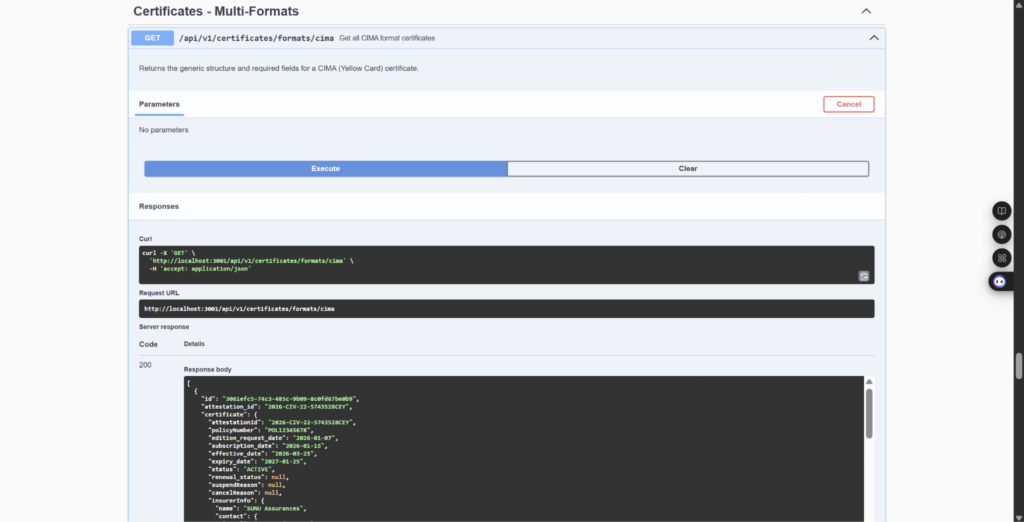
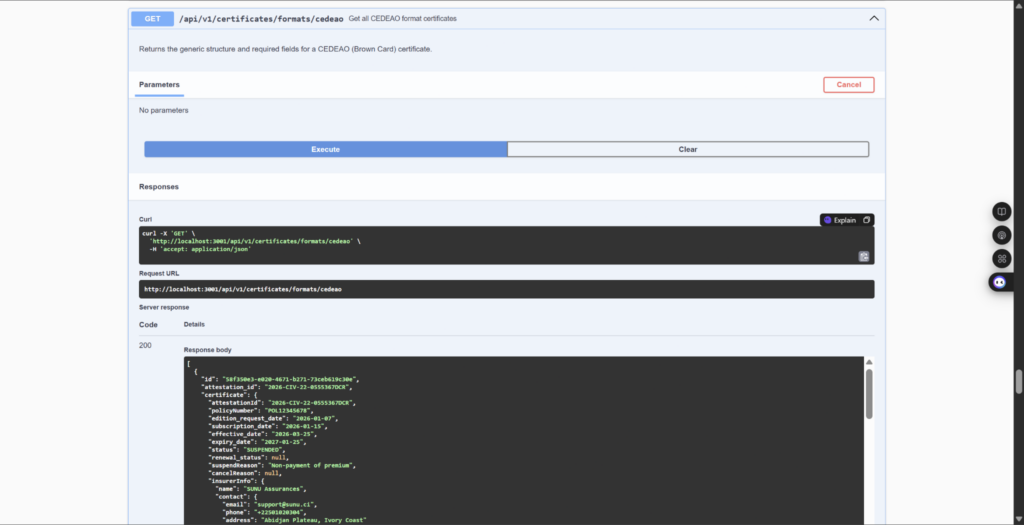
The Infinity project focused on automating vehicle insurance certificate and delivery workflows, where several operational issues needed to be solved. The team had to support certificate lifecycle management, prevent duplicate issuance, handle multiple certificate formats, and improve backend reliability across attestation, delivery, verification, fleet management, and audit-related APIs. Another key challenge was maintaining accurate status handling, expiry tracking, and response consistency across different API formats while working under strict implementation deadlines.
Our Solution
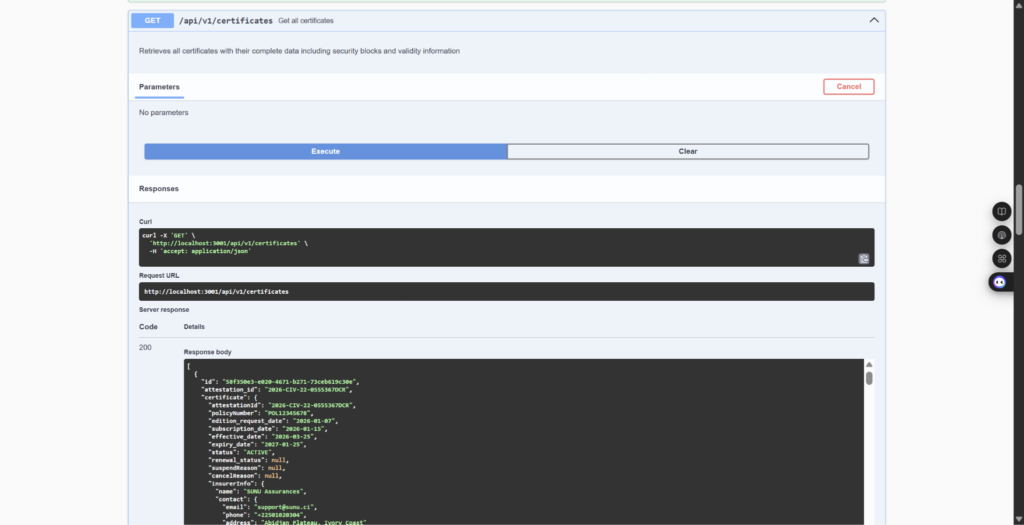
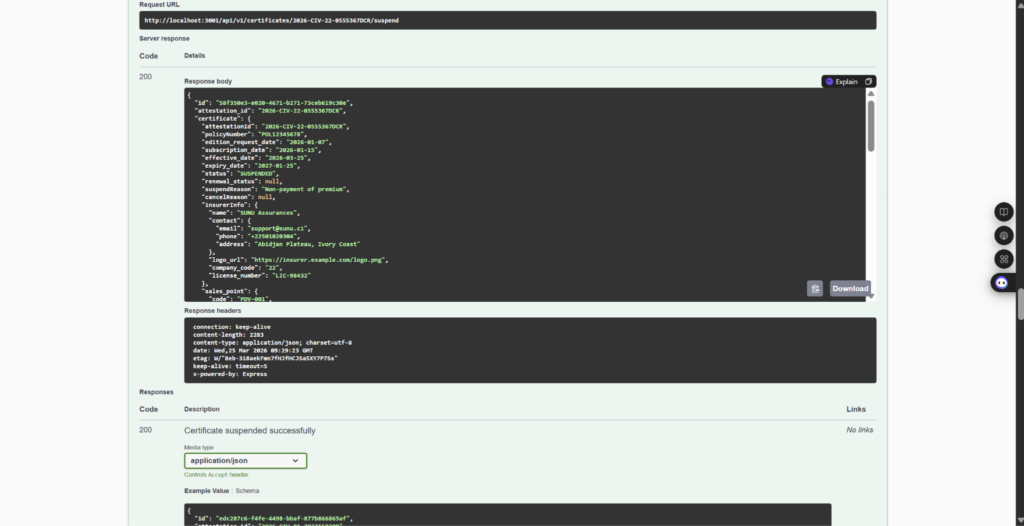
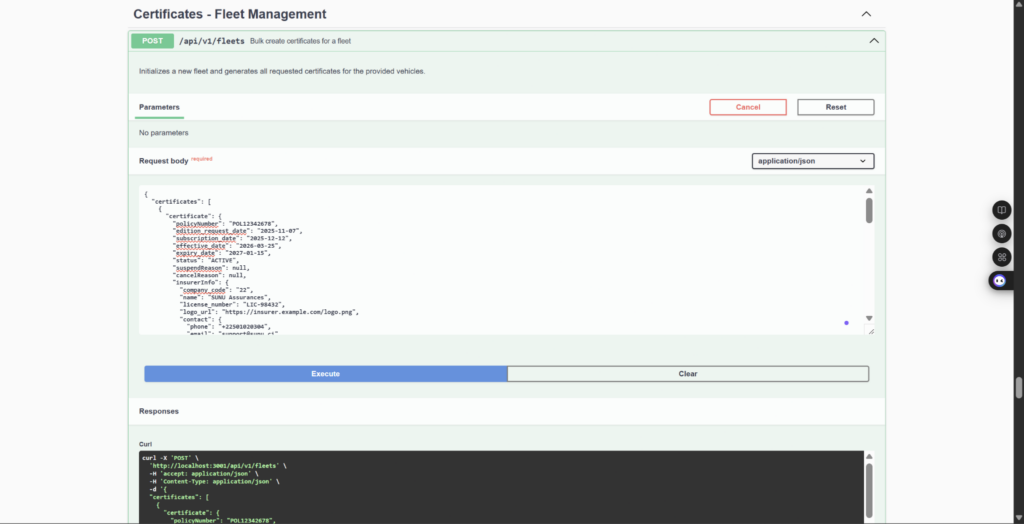
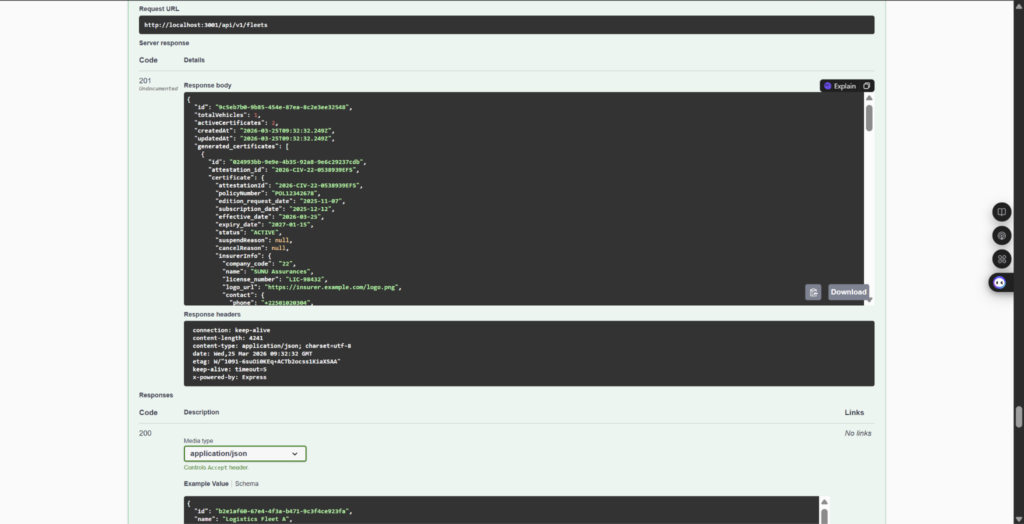
We worked on a backend microservices solution that improved certificate processing, delivery handling, verification, and fleet operations. The team completed milestone updates, whitelisted endpoints and features, created database migrations, fixed backend validation bugs, implemented GPS data download/storage, added logging across many attestation APIs, and built APIs for availability, publish, view, download, access logs, and audit summaries. We also implemented renewal controls, idempotency, transaction locking, and test coverage to make the system more reliable and safer for production use.
Solution Architecture
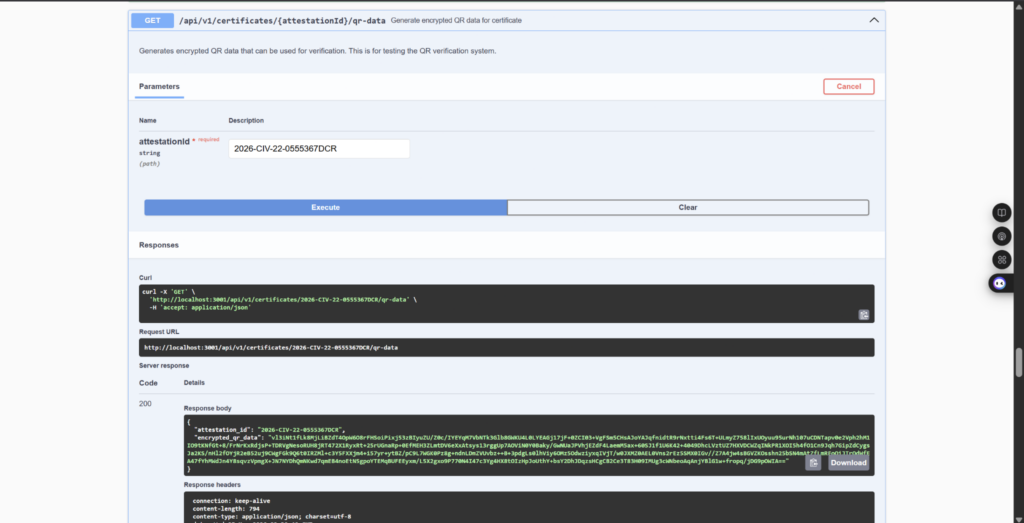
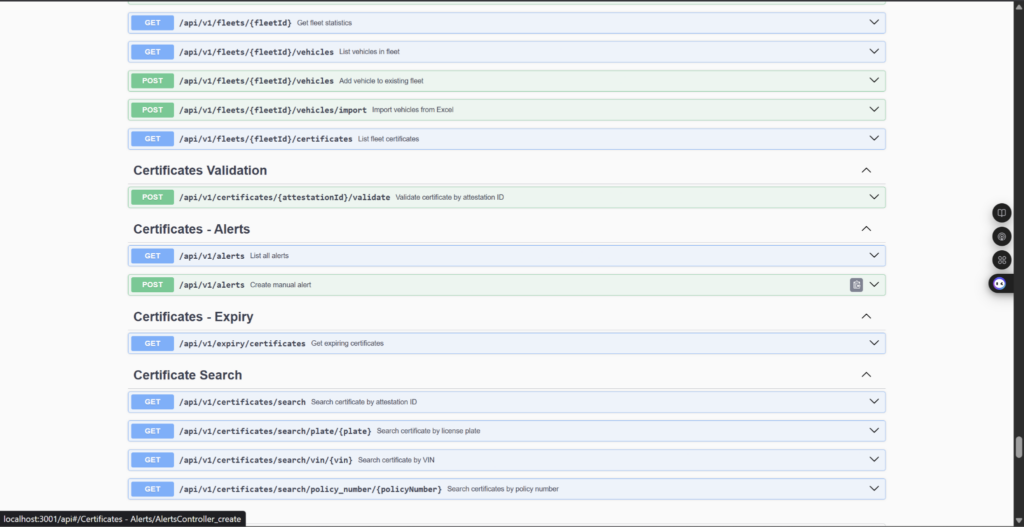
The solution was implemented as a set of backend services centered around attestation, delivery, verification, fleet management, and audit processing. The attestation service handled certificate lifecycle logic, validation rules, renewal protection, and logging. The delivery service exposed APIs for availability, publishing, viewing, downloading, and audit-related actions. The verification service supported certificate verification and QR-based access. These services were coordinated through a backend-first architecture with structured API endpoints, migrations, seeds, and documentation updates.
Deliverables
The delivered work included milestone sheet updates, whitelisted endpoints/features/ETAs, migrations in delivery service, fixes for duplicate certificate issuance, renewal control state handling, backend idempotency, transaction and locking protections, multi-format API fixes, expiry tracking API improvements, logging across 30+ attestation APIs, documentation updates for four microservices, and seed balancing between attestation and delivery services. Additional deliverables included fleet management bug fixes, updated README and weekly reports, and completed Swagger/API-facing backend endpoints.
Tech Stack
- Framework used
- NestJS-based backend microservices, with delivery, attestation, verification, order, and fleet-related services.
- Language/techniques used
- TypeScript, REST API development, backend validation, transaction management, locking, idempotency handling, logging, seed data management, migration creation, and microservice integration.
- Models used
- Certificate/attestation lifecycle models, fleet models, vehicle import models, renewal state models, expiry tracking models, audit/logging models, and delivery/availability response models.
- Skills used
- Backend development, API design, bug fixing, database migrations, service integration, documentation writing, test validation, and performance optimization.
- Databases used
- The project used a backend database layer for attestation and delivery services. Based on the project context, PostgreSQL was the primary relational database used for service data, certificate records, fleet data, and audit-related storage.
- Web Cloud Servers used
- Local development server was used for output during the reported tasks. The project also used hosted backend documentation and API deployment under the Infinity delivery-service domain.
What are the technical Challenges Faced during Project Execution
The main technical challenges were preventing duplicate certificate issuance, handling multiple certificate formats, fixing expiry tracking and multi-format API responses, and keeping attestation and delivery services synchronized. Other challenges included implementing renewal logic safely, protecting operations with transaction locking, adding idempotency, managing GPS data ingestion, and adding logger support across a large number of APIs without breaking existing behavior.
How the Technical Challenges were Solved
The issues were solved by introducing backend validation rules, renewal control states, transaction and locking protection, and idempotent API handling. Duplicate certificate issuance was blocked at the backend level, migrations were created to support new logic, and logging was added across multiple APIs for better traceability. API behavior was improved step by step, seeds were balanced between services, and documentation was updated so the services could be tested and maintained more reliably.
Business Impact
The work improved reliability, reduced duplicate issuance risks, strengthened auditability, and made certificate lifecycle operations safer and more efficient. Backend automation for delivery, renewal, verification, and fleet handling reduced manual effort and improved consistency. The project also gained better observability through logging, better API clarity through documentation, and better operational control through validated workflows and protected service actions.
Project Snapshots (Minimum 10 Pictures)
Project website url
https://infinity.delivery-service.digitechafricaltd.com/api-docs