Introduction
Artificial Intelligence is transforming freight companies by improving transportation planning, route optimization, fleet utilization, shipment visibility, demand forecasting and customer service. By combining AI with GPS, telematics, transportation-management systems, predictive analytics and automation, freight companies can improve asset utilization, reduce costs and manage complex cargo operations more efficiently.
10 Important AI Use Cases for Freight Companies
1. AI Route and Load Optimization
AI can evaluate routes, cargo characteristics, vehicle capacity, delivery windows, traffic and historical transportation data to recommend efficient load and route combinations. This can improve vehicle utilization while reducing unnecessary travel.
2. Predictive ETA and Delay Detection
Machine learning can analyze traffic, weather, route history, port activity, loading times and shipment milestones to predict arrival times. AI can also identify shipments likely to experience delays and trigger early intervention.
3. Intelligent Fleet Management
AI can analyze vehicle utilization, fuel consumption, mileage, driver behavior and route performance. Freight operators can use these insights to allocate assets more efficiently and improve fleet productivity.
4. Predictive Fleet Maintenance
AI can analyze telematics, engine diagnostics, operating conditions, mileage and maintenance records to identify potential equipment failures. Predictive maintenance helps reduce breakdowns and improve asset availability.
5. Freight Demand Forecasting
AI can analyze shipment history, customer demand, seasonality, industry activity and market trends to forecast freight volumes. Better forecasts can support fleet capacity, staffing and network planning.
6. Freight Rate and Pricing Intelligence
AI can analyze historical freight rates, lane performance, capacity, fuel costs, demand and market conditions to support pricing decisions. This can help freight companies evaluate quotes, margins and rate trends.
7. Shipment Exception and Risk Detection
AI can continuously monitor freight movements for route deviations, missed milestones, temperature anomalies, delays and other exceptions. Predictive alerts allow operations teams to address issues before they escalate.
8. AI-Powered Document Processing
AI can extract information from bills of lading, invoices, proof-of-delivery documents, customs paperwork and shipping records. Automated document processing can reduce manual entry and accelerate freight administration.
9. Warehouse, Terminal and Yard Optimization
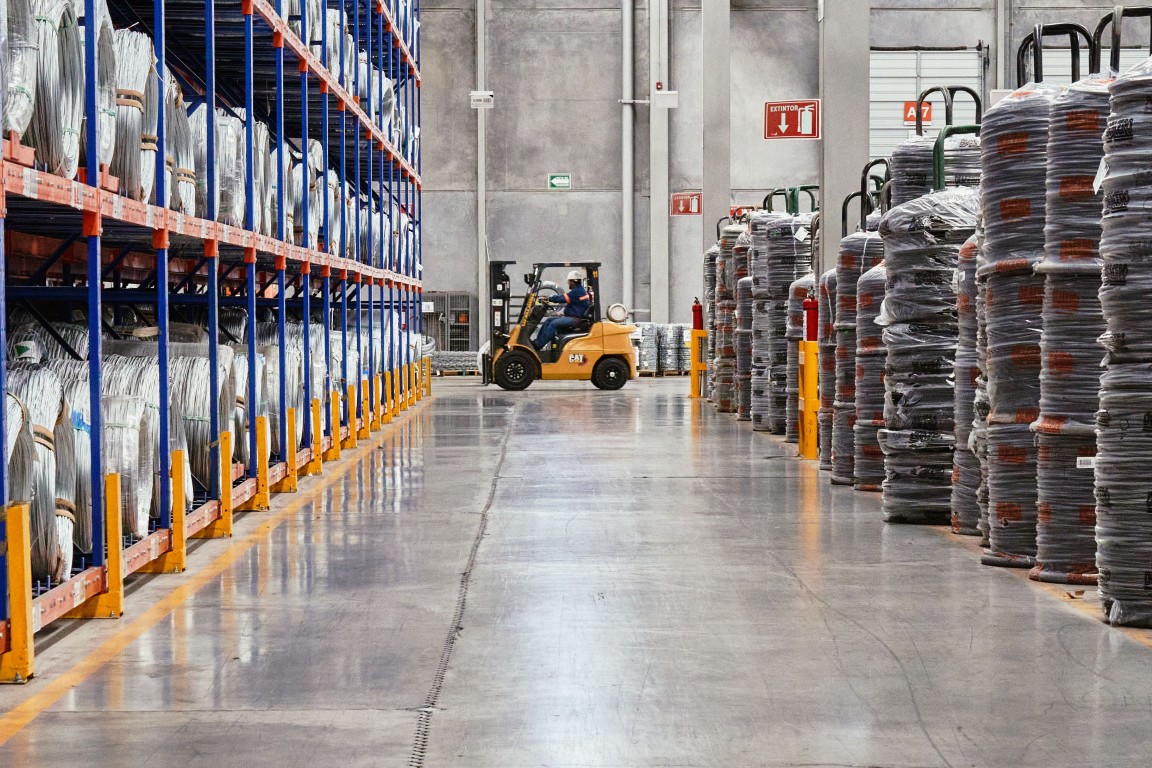
AI can analyze dock schedules, cargo movement, loading sequences, storage locations and equipment utilization. Intelligent planning can reduce congestion and improve throughput across freight facilities.
10. Freight Business Intelligence
AI-powered analytics can combine shipment, fleet, driver, warehouse, customer, pricing and financial data into unified dashboards. Management can monitor cost per shipment, fleet utilization, delivery performance, margins, capacity and overall network efficiency.
Potential Business Impact
| Business Area | Potential AI Impact |
|---|---|
| Routing | Lower transportation time and operating costs |
| Load Planning | Better vehicle and cargo utilization |
| Fleet | Improved asset productivity |
| Maintenance | Fewer unexpected breakdowns |
| Delivery | More accurate ETAs and delay alerts |
| Capacity Planning | Better alignment of assets with freight demand |
| Pricing | More data-driven freight-rate decisions |
| Documentation | Reduced manual processing |
| Terminals | Better yard and loading efficiency |
| Management | Stronger end-to-end freight visibility |
Recommended AI & Software Stack
| Business Requirement | AI / Software | Use in Freight Companies | Website |
|---|---|---|---|
| Transportation Management | Oracle Transportation Management | Freight planning, execution and transportation optimization | Oracle |
| Transportation Management | SAP Transportation Management | Freight planning, carrier management and execution | SAP |
| Transportation Management | Blue Yonder | Transportation planning and supply-chain optimization | Blue Yonder |
| Freight Management | Descartes | Freight management, customs and logistics technology | Descartes |
| Freight Marketplace | Freightos | Digital freight marketplace and freight-rate intelligence | Freightos |
| Fleet Telematics | Samsara | Vehicle tracking, telematics and fleet analytics | Samsara |
| Fleet Telematics | Geotab | GPS, vehicle data and fleet intelligence | Geotab |
| Mapping & Routing | HERE Technologies | Mapping, routing and location intelligence | HERE |
| Mapping & Routing | TomTom | Navigation, routing and traffic data | TomTom |
| Warehouse Management | Manhattan Associates | Warehouse, distribution and logistics optimization | Manhattan Associates |
| Supply Chain Planning | Kinaxis | Supply-chain planning and resilience analytics | Kinaxis |
| AI & LLM | OpenAI | Freight assistants, document intelligence and workflow automation | OpenAI |
| Cloud AI | Microsoft Azure AI | Predictive analytics, machine learning and computer vision | Azure AI |
| Cloud AI | Google Cloud | AI, ML and transportation analytics | Google Cloud |
| Cloud Infrastructure | AWS | Scalable freight applications and IoT infrastructure | AWS |
| IoT | AWS IoT | Connected trucks, trailers and freight sensors | AWS IoT |
| Data & AI | Databricks | Freight data engineering and machine learning | Databricks |
| Data Warehouse | Snowflake | Centralized shipment, fleet and commercial data | Snowflake |
| Business Intelligence | Power BI | Freight, fleet and financial dashboards | Power BI |
| Analytics | Tableau | Freight network and operational visualization | Tableau |
| Automation | UiPath | Billing, documentation and back-office automation | UiPath |
| CRM | Salesforce | Shipper, customer and account management | Salesforce |
| Communication | Twilio | Shipment notifications and customer communication | Twilio |
| Customer Support | Zendesk | Freight customer service and support management | Zendesk |
| Digital Documents | DocuSign | Freight contracts and commercial documentation | DocuSign |
Freight Industry Technology Value Chain
Shipper Demand → Customer Acquisition → Freight Quotation → Rate Management → Shipment Booking → Cargo Planning → Load Consolidation → Carrier Selection → Vehicle Allocation → Route Planning → Pickup → Origin Warehouse → Terminal/Hub → Loading → Transportation → Real-Time Tracking → ETA Prediction → Exception Management → Destination Terminal → Unloading → Delivery → Proof of Delivery → Billing → Payment → Claims/Returns → Fleet Maintenance → Performance Analytics → Business Intelligence → Continuous Improvement
The Future of AI-Powered Freight Companies
The future of freight management will increasingly combine AI, telematics, GPS, IoT, predictive analytics, computer vision and intelligent transportation systems.
AI-powered freight platforms will increasingly connect demand forecasting with capacity planning, load optimization, carrier allocation and real-time route management. Predictive systems will identify delays, asset failures and shipment exceptions before they significantly affect operations.
Generative AI will also support freight documentation, customer communication, operations copilots, contract analysis and internal knowledge management, reducing administrative workloads across freight organizations.
How Blackcoffer Can Help Freight Companies
Blackcoffer can help freight companies build and integrate AI-powered solutions across route optimization, load planning, fleet intelligence, predictive maintenance, freight pricing, shipment monitoring, document automation and business intelligence.
Our capabilities include:
- AI and machine learning solutions
- Route and load optimization
- Predictive fleet maintenance
- Freight demand forecasting
- Freight pricing analytics
- Shipment ETA prediction
- Shipment exception detection
- Telematics and IoT analytics
- AI document processing
- Warehouse and terminal optimization
- Generative AI and LLM applications
- RAG and enterprise knowledge systems
- Freight dashboards and BI
- Workflow automation
- Cloud and data engineering
- Custom freight-management software
Conclusion
AI can help freight companies optimize cargo movement, improve vehicle utilization, predict delays, reduce operating costs, automate documentation and strengthen end-to-end shipment visibility. By integrating AI with transportation-management systems, telematics, IoT and freight data, companies can build more intelligent, efficient and resilient freight operations.
Contact
Are you seeking a similar solution?
Please reach me:
Email: ajay@blackcoffer.com
WhatsApp: +91 9717367468
LinkedIn: linkedin.com/in/asbidyarthy
Web Whatsapp: https://wa.me/919717367468