Introduction
Grocery chains operate complex networks involving suppliers, procurement, warehouses, stores, eCommerce, delivery, pricing, promotions and customer service. Artificial Intelligence can connect these operations through predictive analytics, computer vision, recommendation engines and intelligent automation.
From forecasting demand for fresh products to optimizing shelf availability, reducing food waste and personalizing promotions, AI can help grocery chains improve operational efficiency while creating better customer experiences.
20 AI Use Cases for Grocery Chains
1. Demand Forecasting
AI analyzes historical sales, seasonality, promotions, weather patterns and local demand signals to forecast product demand. This helps grocery chains maintain appropriate inventory levels across stores.
2. Inventory Optimization
AI continuously evaluates inventory levels, sales velocity and replenishment requirements. It can recommend optimal stock quantities and reduce both overstocking and stockouts.
3. Automated Replenishment
AI-powered replenishment systems can automatically identify products that need restocking. Purchase and transfer recommendations can be generated based on predicted demand.
4. Fresh Food Waste Prediction
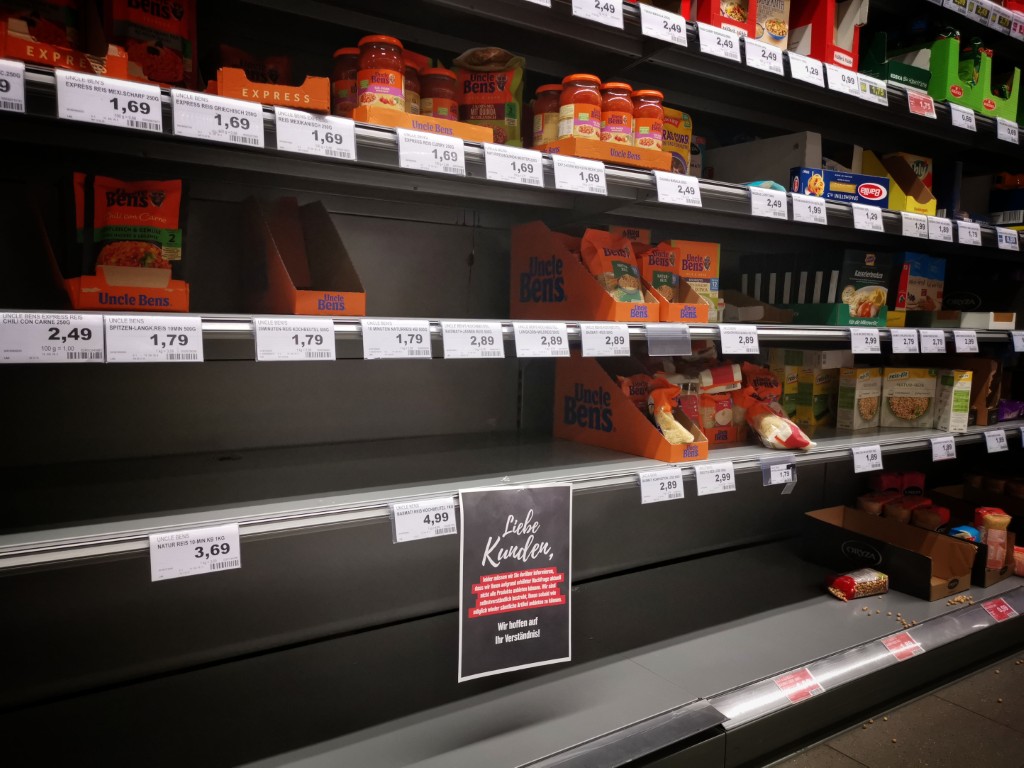
AI can predict demand and spoilage risks for fruits, vegetables, dairy, bakery and other perishable products. Stores can adjust ordering, markdowns and inventory allocation to reduce waste.
5. Dynamic Pricing
AI can analyze demand, inventory levels, product lifecycle and promotions to support dynamic pricing decisions. This is particularly useful for products approaching expiration.
6. Personalized Promotions
AI analyzes customer purchasing patterns to create targeted offers and promotions. Customers can receive discounts and recommendations based on their interests and purchase history.
7. Product Recommendations
Recommendation engines can suggest complementary products based on shopping behavior. For example, customers purchasing pasta may receive recommendations for sauces, cheese or beverages.
8. AI Shopping Assistants
Conversational AI assistants can help customers search for products, compare items, identify alternatives and create shopping lists through web, mobile or messaging channels.
9. Intelligent Product Search
AI-powered search understands natural-language queries, product attributes and customer intent. This improves product discovery across grocery websites and mobile applications.
10. Shelf Monitoring
Computer vision can analyze store cameras or shelf images to identify empty shelves, misplaced products and inventory gaps. Store employees can receive automated alerts for corrective action.
11. Planogram Optimization
AI can analyze product sales, shelf placement and customer behavior to recommend better product layouts. This can help grocery chains improve shelf utilization and product visibility.
12. Checkout Optimization
AI can analyze checkout traffic and transaction patterns to predict queues and optimize staffing. Computer vision and intelligent checkout systems can also support automated shopping experiences.
13. Fraud and Loss Detection
AI can identify unusual transaction patterns, suspicious returns and other potential fraud indicators. This enables grocery chains to prioritize investigations while reducing unnecessary manual monitoring.
14. Supplier Performance Analysis
AI evaluates supplier pricing, delivery reliability, quality, fill rates and historical performance. Procurement teams can use these insights to improve supplier management and sourcing decisions.
15. Warehouse Optimization
AI can optimize warehouse inventory placement, picking sequences and replenishment processes. Predictive analytics can also improve distribution-center capacity planning.
16. Delivery Route Optimization
AI analyzes orders, delivery locations, traffic conditions and vehicle capacity to optimize delivery routes. This can reduce delivery costs and improve fulfillment efficiency.
17. Customer Service Automation
AI chatbots and voice assistants can answer questions about products, orders, store information, refunds and deliveries. Complex issues can be escalated to human agents.
18. Store Energy Optimization
AI can optimize refrigeration, HVAC, lighting and other energy-consuming systems based on occupancy, operating schedules and environmental conditions.
19. Workforce Scheduling
AI can forecast staffing requirements based on store traffic, sales patterns and operational workload. Managers can use these predictions to create more efficient employee schedules.
20. Grocery Business Intelligence
AI combines sales, inventory, customer, supplier, store and financial data into actionable business intelligence. Executives can use predictive dashboards to monitor performance and identify emerging opportunities.
Potential Business Impact
| Business Area | Potential AI Impact |
|---|---|
| Sales | Personalized recommendations and promotions can increase basket value |
| Inventory | Better forecasting can reduce stockouts and excess inventory |
| Food Waste | Predictive analytics can reduce spoilage of perishable products |
| Procurement | Supplier intelligence can improve purchasing decisions |
| Stores | Computer vision can improve shelf availability and execution |
| Warehousing | AI can optimize picking, storage and replenishment |
| Delivery | Route optimization can improve fulfillment efficiency |
| Customer Experience | AI assistants can provide faster, personalized support |
| Workforce | Predictive scheduling can align staffing with demand |
| Energy | AI can optimize refrigeration, HVAC and lighting |
| Management | Predictive analytics can improve strategic decision-making |
Recommended AI & Software Stack for Grocery Chains
| Business Requirement | AI / Software | Use in Grocery Chains | Website |
|---|---|---|---|
| Grocery Retail Management | Oracle Retail | Merchandising, pricing and retail operations | Oracle |
| ERP & Supply Chain | SAP | Procurement, inventory and supply-chain management | SAP |
| Store & Business Management | Microsoft Dynamics 365 | Retail, finance, CRM and operations | Microsoft |
| eCommerce | Shopify | Online grocery storefronts and commerce | Shopify |
| eCommerce | Adobe Commerce | Enterprise grocery eCommerce | Adobe |
| Product Information | Akeneo | Product catalog and product information management | Akeneo |
| Financial Management | NetSuite | Finance, accounting and business management | Oracle NetSuite |
| Procurement | Coupa | Procurement and supplier management | Coupa |
| Procurement | SAP Ariba | Sourcing and supplier collaboration | SAP Ariba |
| Supplier Discovery | Thomasnet | Supplier and product sourcing | Thomasnet |
| CRM | Salesforce | Customer data, sales and loyalty management | Salesforce |
| Marketing Automation | HubSpot | Marketing, CRM and customer engagement | HubSpot |
| Customer Engagement | Braze | Personalized customer messaging and campaigns | Braze |
| Marketing Automation | Klaviyo | Email, SMS and personalized marketing | Klaviyo |
| Advertising | Google Ads | Customer acquisition and product advertising | Google Ads |
| Advertising | Meta Ads | Digital advertising and customer acquisition | Meta |
| Analytics | Google Analytics | Website and digital shopping analytics | Google Analytics |
| Payments | Stripe | Online payments and transaction processing | Stripe |
| Payments | Adyen | Enterprise payment processing | Adyen |
| Customer Service | Zendesk | Customer support and ticket automation | Zendesk |
| Communications | Twilio | SMS, messaging and customer communications | Twilio |
| Logistics | DHL | Logistics and delivery services | DHL |
| Logistics | FedEx | Delivery and logistics management | FedEx |
| Building Automation | Siemens | Store automation, energy and building systems | Siemens |
| Smart Buildings | Schneider Electric | Energy and facility optimization | Schneider Electric |
| Computer Vision | AWS Rekognition | Image and video analysis for store operations | AWS |
| IoT | AWS IoT | Connected refrigeration, equipment and store devices | AWS IoT |
| Generative AI | OpenAI | AI assistants, recommendations and business automation | OpenAI |
| Enterprise AI | Microsoft Azure AI | AI applications, machine learning and automation | Microsoft Azure |
| Data & AI | Databricks | Data engineering, machine learning and AI | Databricks |
| Data Warehouse | Snowflake | Enterprise data storage and analytics | Snowflake |
| Business Intelligence | Power BI | Grocery sales, inventory and operational dashboards | Microsoft Power BI |
| Automation | Zapier | Workflow and business process automation | Zapier |
| Automation | Make | Multi-system workflow automation | Make |
| Cloud Infrastructure | AWS | Scalable AI, analytics and application infrastructure | AWS |
| Cloud Infrastructure | Google Cloud | AI, data analytics and cloud infrastructure | Google Cloud |
Grocery Chain Technology Value Chain
Farmers & Manufacturers → Suppliers → Sourcing → Procurement → Warehousing → Distribution Centers → Inventory Planning → Transportation → Grocery Stores → Shelf Management → Pricing → Promotions → Marketing → Customer Acquisition → eCommerce → Product Discovery → Shopping → Checkout → Payments → Order Management → Fulfillment → Delivery → Customer Support → Returns → Loyalty → Customer Analytics → Demand Forecasting → Business Intelligence → Strategic Planning
The Future of AI-Powered Grocery Chains
The next generation of grocery chains will increasingly operate through interconnected AI systems. Demand forecasting, automated replenishment, computer vision, personalized commerce, intelligent pricing and predictive supply-chain management will become integrated rather than isolated technologies.
Generative AI will also become an important interface for employees and customers. Store managers may use AI assistants to understand performance and operational issues, while customers can interact with conversational shopping assistants to discover products and complete purchases.
The long-term opportunity is to create AI-native grocery operations where data from suppliers, stores, eCommerce, logistics, customers and financial systems continuously feeds intelligent decision-making.
How Blackcoffer Can Help Grocery Chains
Blackcoffer can help grocery chains design and implement AI solutions across retail, supply chain, customer experience and business intelligence.
Our capabilities include:
- AI-powered demand forecasting
- Inventory and replenishment optimization
- Generative AI shopping assistants
- Customer recommendation engines
- Computer vision for shelf monitoring
- Predictive analytics and business intelligence
- Supplier and procurement analytics
- AI-powered customer service
- eCommerce and retail automation
- Data engineering and AI/ML pipelines
- Power BI and enterprise analytics
- Cloud-based AI infrastructure
- End-to-end workflow automation
With expertise across AI, Generative AI, data engineering, automation, cloud and analytics, Blackcoffer can integrate AI into existing grocery technology ecosystems rather than requiring businesses to replace their entire technology stack.
Transform Your Grocery Business With AI
AI can help grocery chains make faster decisions, reduce operational inefficiencies, improve customer experiences and build more intelligent retail operations.
Contact
Are you seeking a similar solution?
Please reach me:
Email: ajay@blackcoffer.com
WhatsApp: +91 9717367468
LinkedIn: linkedin.com/in/asbidyarthy
Web Whatsapp: https://wa.me/919717367468