Introduction
Modern farms manage complex operations involving crop production, livestock, soil health, irrigation, machinery, labor, agricultural inputs, harvesting, storage, distribution and financial management.
Weather variability, rising input costs, unpredictable yields, equipment downtime and changing market demand can make farm management difficult.
Artificial Intelligence can help farms become more productive, resource-efficient and profitable through predictive analytics, precision agriculture and intelligent automation.
AI can analyze soil measurements, weather forecasts, satellite imagery, crop observations, livestock records, machinery data, inventory and market information to help farmers make better operational and financial decisions.
1. AI Crop Monitoring & Precision Agriculture
AI can analyze satellite imagery, drone photographs, soil measurements and field observations to monitor crop conditions throughout the growing season.
Applications include:
- Crop growth monitoring
- Vegetation-health analysis
- Identification of unusual field conditions
- Crop-stage classification
- Field-level performance comparisons
- Irrigation and nutrient planning
- Identification of areas requiring inspection
For example, AI can compare vegetation patterns across a farm and highlight areas that may require additional investigation.
Farmers can prioritize field visits and apply inputs according to specific field conditions rather than treating every area identically.
Potential impact: Better field visibility, more targeted agricultural inputs and improved farm management.
2. AI Irrigation & Resource Optimization
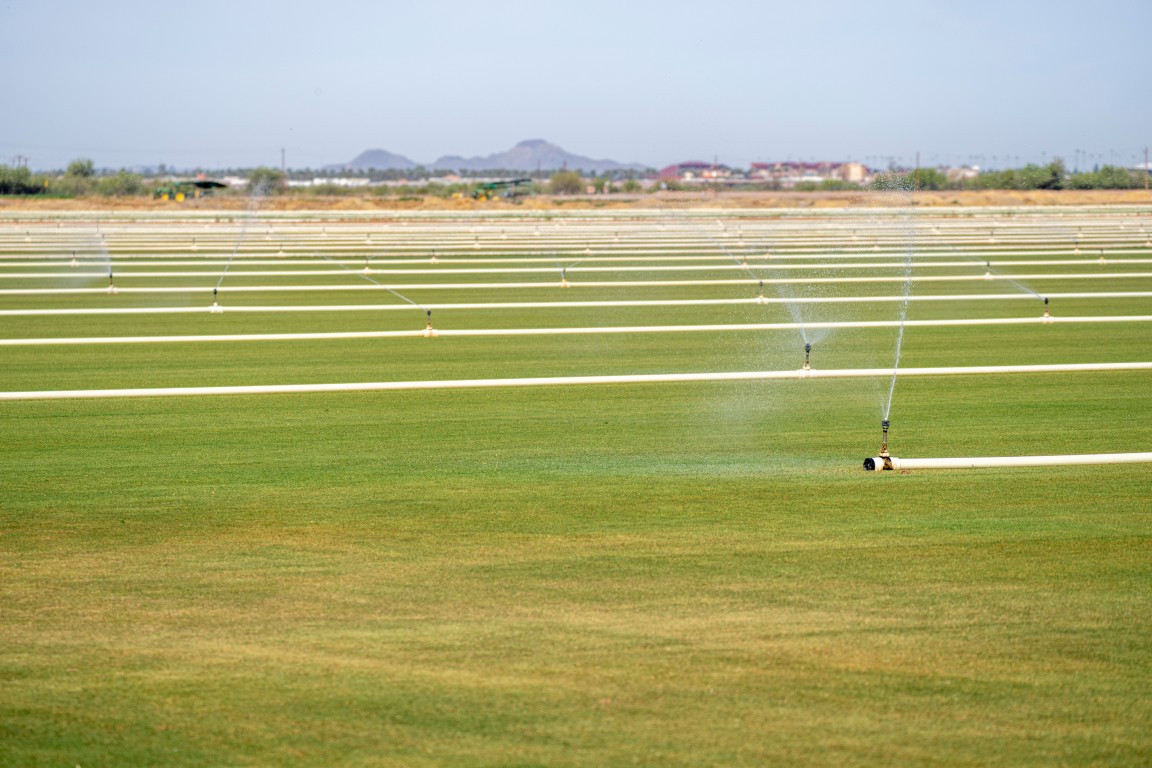
AI can analyze soil moisture, weather forecasts, crop requirements and irrigation history to help farmers optimize water usage.
Applications include:
- Irrigation scheduling
- Soil-moisture monitoring
- Water-demand forecasting
- Irrigation-system anomaly detection
- Pumping schedule optimization
- Fertilizer application planning
- Energy consumption analysis
Connected sensors and irrigation controllers can enable recommendations based on current field conditions.
For example, an AI system could recommend postponing irrigation when expected rainfall and soil-moisture conditions indicate that additional watering may not be necessary.
Potential impact: Reduced resource waste, improved irrigation planning and better control over operating costs.
3. AI Pest, Disease & Crop Stress Detection
Crop problems can spread or worsen when they are not identified early.
AI can analyze plant photographs, drone imagery, weather conditions and field observations to identify patterns associated with:
- Pest activity
- Disease symptoms
- Nutrient deficiencies
- Water stress
- Plant discoloration
- Abnormal growth
- Crop deterioration
Farmers can use AI-generated alerts to prioritize inspections and obtain appropriate agronomic advice.
For example, an image-analysis application could flag leaves showing patterns consistent with a possible disease and recommend collecting additional information for confirmation.
Potential impact: Earlier identification of crop-health concerns and more targeted intervention.
AI-generated diagnoses should be verified where appropriate by qualified agricultural professionals, especially before applying treatments.
4. AI Yield Forecasting & Harvest Planning
AI can estimate expected production using historical yields, crop varieties, planting dates, soil conditions, satellite data and weather patterns.
It can assist with:
- Expected yield estimation
- Harvest readiness assessment
- Labor planning
- Machinery allocation
- Storage capacity planning
- Harvest scheduling
- Supply commitments
- Sales planning
For example, a farm operator could use yield forecasts to estimate how much storage capacity and harvesting equipment will be required over the coming weeks.
These forecasts can also support discussions with buyers, processors and logistics providers.
Potential impact: Better harvest preparation, reduced operational uncertainty and improved market planning.
5. AI Livestock Health & Productivity Monitoring
For farms that raise livestock, AI can help analyze animal records, sensor information and observed behavior.
Applications include:
- Feed consumption tracking
- Weight-gain monitoring
- Activity-pattern analysis
- Reproductive record management
- Milk-production analysis
- Herd movement monitoring
- Environmental condition monitoring
- Identification of unusual behavior
For example, AI can flag changes in activity or feeding patterns that may warrant inspection by farm personnel or a veterinarian.
AI can also help track production costs and compare performance across animal groups.
Potential impact: Better livestock visibility, more informed feeding decisions and earlier investigation of potential health issues.
AI alerts should support, not replace, veterinary assessment and appropriate animal-welfare practices.
6. AI Farm Machinery & Workforce Optimization
Farm operations depend on equipment, vehicles, irrigation systems and labor being available at the right time.
AI can help coordinate:
- Tractors and agricultural machinery
- Planting and harvesting equipment
- Field crews
- Irrigation operations
- Equipment servicing
- Fuel consumption
- Work assignments
- Daily farm schedules
It can identify scheduling conflicts, forecast equipment requirements and help allocate machinery based on field size, crop stage and task priority.
Where equipment telemetry is available, AI can also flag abnormal operating patterns that may indicate a maintenance requirement.
Potential impact: Better machinery utilization, reduced downtime and more efficient workforce planning.
7. AI Agricultural Procurement & Inventory Management
Farms purchase seeds, fertilizers, crop-protection products, animal feed, veterinary supplies, spare parts, fuel and other inputs.
AI can forecast requirements using production plans, inventory records, historical consumption and upcoming farm activities.
Applications include:
- Input-demand forecasting
- Stock-level monitoring
- Purchase planning
- Supplier comparison
- Price-change monitoring
- Storage inventory tracking
- Expiry monitoring where applicable
- Procurement cost analysis
AI can also compare planned input use with actual consumption to identify unusual differences.
Potential impact: Fewer stock-outs, reduced unnecessary purchasing and improved cost control.
8. AI Harvest, Storage & Agricultural Supply Chain Optimization
Farm profitability depends not only on production but also on moving harvested products to the right buyers at the right time.
AI can help coordinate:
- Harvest scheduling
- Produce grading
- Storage allocation
- Cold-chain monitoring
- Transport planning
- Shipment scheduling
- Buyer matching
- Demand forecasting
- Spoilage-risk monitoring
Computer vision can assist with sorting and grading suitable produce when validated against the required quality standards.
AI can also compare production forecasts with buyer requirements and available storage capacity to help plan dispatches.
Potential impact: Reduced preventable post-harvest losses, better logistics planning and improved market access.
9. AI Farm Financial Management & Risk Analytics
Farm operators need to understand profitability across crops, fields, livestock groups and production cycles.
AI can combine agricultural records with financial data to analyze:
- Cost per field or crop
- Input expenditure
- Labor costs
- Machinery operating costs
- Revenue by product
- Cash-flow requirements
- Commodity-price exposure
- Weather-related risks
- Production-cost trends
- Farm-level profitability
For example, AI can compare actual input expenditure with the farm budget and identify operations that are consuming more resources than planned.
It can also assist with organizing records for insurance claims, financial reviews and farm performance assessments.
Potential impact: Better financial visibility, earlier identification of cost overruns and more informed business planning.
10. AI Farm Business Intelligence & Management Copilot
An AI-powered farm management platform can connect production, inventory, machinery, livestock, sales and accounting information.
Farm owners can ask:
“Which crops generated the highest gross margin this season?”
or:
“Which fields had unusually high input costs?”
or:
“How much working capital will be required for the next production cycle?”
AI can analyze:
- Crop and livestock performance
- Revenue and operating costs
- Yield trends
- Input efficiency
- Machinery utilization
- Labor productivity
- Inventory levels
- Buyer orders
- Cash flow
- Seasonal profitability
This transforms farm management software from a reporting system into an AI-powered decision-support platform.
Potential Business Impact
Actual outcomes depend on the type of farm, crop varieties, livestock operations, local conditions, equipment, data quality and technology adoption. The following are illustrative targets for pilot initiatives, not guaranteed results.
| Business Area | Potential Target |
|---|---|
| Field monitoring workload | -20–40% |
| Agricultural input waste | -10–20% |
| Irrigation resource use | -10–25% |
| Machinery downtime | -10–20% |
| Procurement administration | -20–40% |
| Farm reporting workload | -30–50% |
| Livestock monitoring workload | -20–40% |
| Yield forecasting | Measurable improvement |
| Post-harvest losses | -10–20% |
| Management reporting | Major automation |
Recommended AI & Software Stack for Farms
| Business Requirement | AI / Software | Use in Farms | Website |
|---|---|---|---|
| Farm operations and machinery management | John Deere Operations Center | Field planning, machinery data, operational monitoring and field-performance analysis | John Deere Operations Center |
| Precision agriculture and soil intelligence | CropX | Soil and weather monitoring, irrigation planning, crop insights and input optimization | CropX |
| Farm monitoring and agricultural intelligence | Cropin | Crop monitoring, farm records, yield intelligence, agricultural operations and traceability | Cropin |
| Crop planning and farm economics | Agworld | Crop planning, agronomic records, input tracking and field-level financial performance | Agworld |
| Farm management and agricultural planning | AGRIVI | Crop management, work planning, inventory, compliance, finances and farm analytics | AGRIVI |
| Livestock and grazing management | AgriWebb | Livestock records, grazing plans, animal performance, farm mapping and productivity analysis | AgriWebb |
| Precision crop management | Climate FieldView | Field data visualization, crop performance monitoring and precision agriculture workflows | Climate FieldView |
| Satellite crop monitoring | EOSDA Crop Monitoring | Remote crop-health monitoring, vegetation analysis, field scouting and weather insights | EOSDA |
| AI assistants and agricultural analytics | OpenAI | Farm knowledge assistants, reporting, document analysis and decision support | OpenAI |
| Cloud AI and computer vision | Microsoft Azure AI | Crop-image analysis, document processing and custom agricultural AI applications | Azure AI |
| Cloud AI and data processing | Google Cloud | Machine learning, forecasting, geospatial analysis and agricultural applications | Google Cloud |
| Cloud infrastructure and IoT | AWS | Connected sensors, farm data pipelines, equipment integrations and scalable applications | AWS |
| Data and AI platform | Databricks | Combining crop, weather, machinery, livestock and financial data | Databricks |
| Data warehouse | Snowflake | Centralized agricultural and commercial data for reporting and AI | Snowflake |
| Business intelligence | Power BI | Crop profitability, livestock production, costs, inventory and operational dashboards | Power BI |
| Farm sales and customer management | Salesforce | Buyer relationships, sales pipelines, contract management and customer information | Salesforce |
| Marketing and direct sales | HubSpot | Lead management, customer engagement, email marketing and sales follow-ups | HubSpot |
| Farm-product e-commerce | Shopify | Direct sales of farm produce, packaged products and eligible subscription offerings | Shopify |
| Workflow automation | Make | Connecting farm applications, AI tools, sensors, notifications and reporting | Make |
| Workflow automation | Zapier | Automating administrative tasks, reminders and connected business workflows | Zapier |
| Payments and subscriptions | Stripe | Farm-product payments, digital billing and recurring subscriptions where supported | Stripe |
The ideal technology stack depends on whether the operation focuses on crops, livestock, mixed farming, horticulture or large-scale commercial production.
A practical approach is to integrate existing farm-management and machinery platforms with AI, sensors, geospatial data, analytics and automation, rather than replace every system.
AI-Powered Farm Value Chain
Market Research → Crop / Livestock Planning → Land & Soil Assessment → Seed / Animal Selection → Supplier Discovery → Procurement → Field Preparation → Planting / Breeding → Irrigation & Feeding → Crop / Livestock Monitoring → Pest & Health Assessment → Fertilization & Input Management → Machinery & Workforce Scheduling → Field Operations → Yield / Production Forecasting → Harvest / Animal Production → Quality Assessment → Storage → Inventory Management → Buyer Matching → Sales & Distribution → Logistics → Billing → Payment Collection → Traceability → Customer Relationships → Equipment Maintenance → Financial Analysis → Risk Assessment → Farm Profitability → Business Intelligence → Continuous Improvement
The Future of AI-Powered Farms
The future farm will operate as an intelligent ecosystem combining:
Soil + Crops + Livestock + Weather + Machinery + Irrigation + Inventory + Market Data + Finance
↓
Centralized Farm Data Platform
↓
AI & Predictive Analytics
↓
Precision Agriculture + Intelligent Automation
↓
AI Farm Management Copilot
↓
Better Production Decisions + Lower Input Waste + Improved Resource Utilization + Stronger Profitability
AI will increasingly connect on-farm operations with procurement, storage, agricultural markets and financial management.
The objective is not to replace farmers, farm managers or agricultural professionals. It is to reduce repetitive work, provide better visibility into field and livestock conditions, improve resource allocation and support more informed business decisions.
Successful implementation requires reliable farm records, models suited to the relevant production system, appropriate human oversight and practical workflows that fit the realities of farm operations. Privacy, data ownership, connectivity and responsible use of agricultural information should also be considered when selecting technology.
How Blackcoffer Can Help Farms
Blackcoffer can help farms implement:
- AI crop monitoring and disease-detection systems
- Precision agriculture and irrigation analytics
- Yield forecasting and harvest planning
- Livestock monitoring and productivity analytics
- Machinery maintenance and utilization analytics
- Agricultural procurement and inventory forecasting
- AI-powered farm management platforms
- Harvest, storage and supply-chain optimization
- Farm financial analytics and cost forecasting
- Agricultural knowledge assistants
- Farm productivity and profitability dashboards
- Satellite, sensor and IoT integrations
- Automated farm reporting and workflows
- Buyer, CRM and e-commerce integrations
- AI Farm Management Copilot
Our approach is:
Identify the highest-value farm management problem → Build a focused AI solution → Integrate existing farm data and systems → Measure ROI → Scale across farm operations.
Build Your AI-Powered Farm
Want to improve agricultural productivity, optimize input usage, monitor crops or livestock, automate farm records and gain better visibility into operating costs and profitability?
Blackcoffer can design and implement an AI-powered technology ecosystem tailored to your farm.
Contact
Are you seeking a similar solution?
Please reach me:
Email: ajay@blackcoffer.com
WhatsApp: +91 9717367468
LinkedIn: linkedin.com/in/asbidyarthy
Web Whatsapp: https://wa.me/919717367468