Introduction
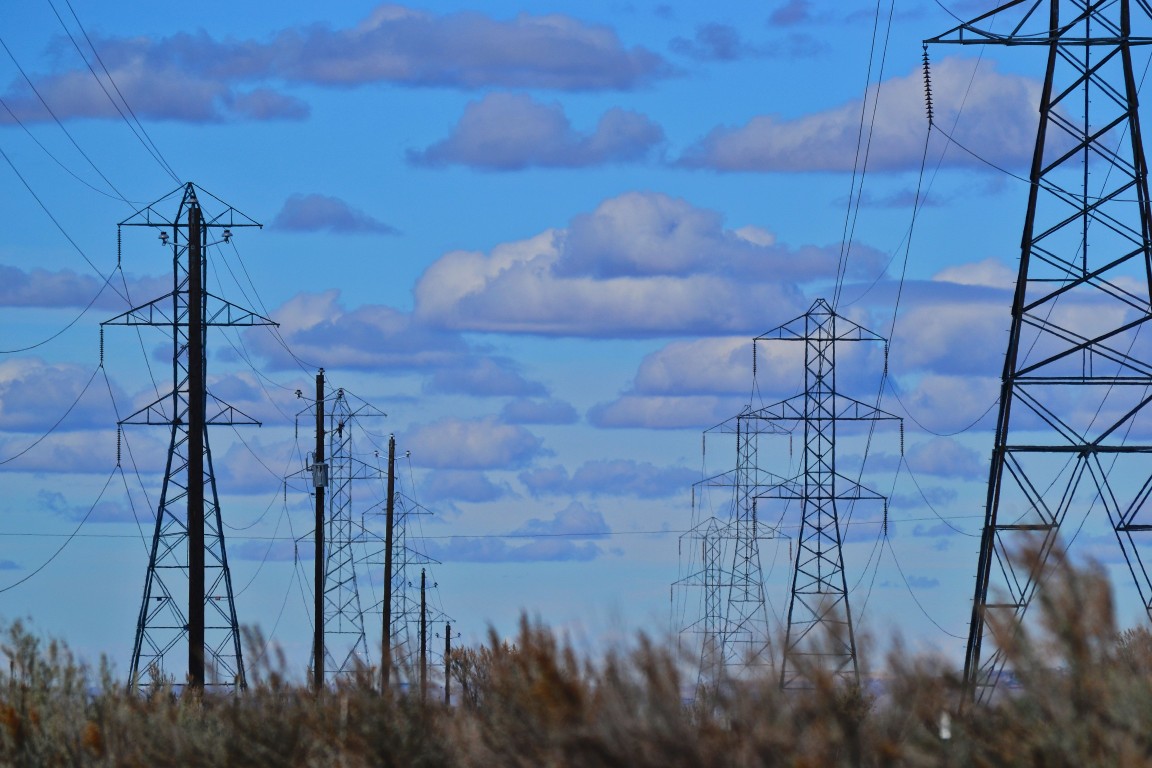
Power distribution companies are responsible for delivering electricity from substations and distribution networks to homes, businesses, industries and other consumers. Their operations involve grid planning, load management, substations, transformers, distribution lines, smart meters, outage response, billing, customer service and regulatory reporting.
Increasing electricity demand, distributed renewable energy, electric vehicle adoption, aging infrastructure, power losses and unpredictable weather events create significant operational challenges.
Artificial Intelligence can help power distribution companies build smarter, more reliable and more efficient electricity distribution networks through predictive analytics, intelligent automation and real-time operational intelligence.
AI can analyze smart meter readings, network telemetry, outage records, weather forecasts, equipment condition, customer consumption and financial data to improve grid reliability, reduce avoidable losses and optimize distribution operations.
1. AI Electricity Demand Forecasting
Power distribution companies must forecast electricity demand across feeders, transformers, substations, neighborhoods and customer segments.
AI can analyze:
- Historical electricity consumption
- Weather conditions
- Time-of-day and seasonal patterns
- Customer categories
- Industrial operating schedules
- Electric vehicle charging demand
- Rooftop solar generation
- New connections and urban development
Machine learning models can forecast demand at different time horizons, from short-term operational planning to longer-term network expansion.
For example, an AI system could identify a distribution transformer likely to experience peak loading during an upcoming heatwave and alert planners to investigate available capacity and mitigation options.
Potential impact: Better demand planning, improved capacity utilization and earlier identification of overloaded network components.
2. AI Outage Prediction & Fault Detection
Unplanned interruptions affect customers, businesses and critical services. AI can help distribution companies analyze network conditions to identify emerging problems and respond more effectively to failures.
Applications include:
- Outage probability assessment
- Fault location estimation
- Feeder-level anomaly detection
- Transformer overload alerts
- Outage cause classification
- Failure-pattern analysis
- Restoration-time forecasting
- Automated incident prioritization
AI can combine smart meter outage signals, protection-device events, weather information and network topology to help operators identify affected areas.
When integrated with an Advanced Distribution Management System (ADMS), appropriate automation can support fault location, isolation and service restoration workflows.
Potential impact: Faster outage investigation, improved restoration planning and reduced service interruption durations.
AI-generated predictions must be validated against operational telemetry and approved grid protection and switching procedures.
3. AI Predictive Maintenance for Grid Infrastructure
Distribution networks contain transformers, switchgear, cables, overhead lines, circuit breakers, reclosers, substations and other assets that require continuous maintenance.
AI can analyze equipment measurements, inspection records and maintenance histories to identify abnormal patterns.
Applications include:
- Transformer condition monitoring
- Equipment temperature analysis
- Electrical fault indicators
- Circuit-breaker condition assessment
- Insulation deterioration indicators
- Battery and auxiliary-system monitoring
- Asset failure-risk estimation
- Maintenance prioritization
For example, an AI model can combine transformer loading, temperature trends and historical maintenance records to flag an asset for further inspection.
This enables utilities to move from fixed-interval maintenance toward more condition-informed maintenance planning.
Potential impact: Reduced unplanned equipment failures, better maintenance scheduling and improved asset availability.
4. AI Electricity Loss & Meter Anomaly Detection
Power distribution companies may experience technical losses caused by network resistance and equipment conditions, as well as non-technical losses associated with unauthorized consumption, meter problems or billing irregularities.
AI can analyze:
- Smart meter readings
- Feeder and transformer energy measurements
- Consumption patterns
- Meter event logs
- Billing records
- Network losses
- Account and connection changes
- Historical inspection results
It can identify unusual consumption patterns, discrepancies between energy supplied and billed, and accounts requiring further investigation.
For example, AI can compare aggregate energy measurements with downstream meter data to identify sections of a network with unusually high unexplained losses.
Potential impact: Better loss visibility, more targeted inspections and improved revenue protection.
An anomaly is not proof of electricity theft. Utilities should use explainable risk indicators and authorized verification procedures before taking action against a customer.
5. AI Voltage Optimization & Power Quality Management
Maintaining acceptable voltage and power quality is essential for reliable electricity distribution.
AI can analyze network measurements to help identify:
- Voltage deviations
- Phase imbalance
- Reactive power inefficiencies
- Transformer loading problems
- Power quality anomalies
- Unexpected demand changes
- Potential overload conditions
When integrated with appropriate grid-management systems, AI can assist with voltage and reactive power optimization, capacitor-bank coordination and transformer tap-control recommendations.
These capabilities can help operators maintain voltage within approved limits while reducing avoidable network losses.
Potential impact: Improved voltage management, more efficient network operation and better power quality visibility.
Control actions must operate within validated engineering constraints and approved automation procedures.
6. AI Distributed Energy Resource & EV Integration
Electricity distribution networks increasingly accommodate rooftop solar, battery storage, electric vehicles, flexible demand and other distributed energy resources.
AI can help distribution companies analyze the effects of these resources on local network capacity and operating conditions.
Applications include:
- Rooftop solar generation forecasting
- EV charging demand prediction
- Battery availability estimation
- Distributed energy resource coordination
- Local congestion detection
- Flexible-load scheduling
- Distribution transformer capacity analysis
- Grid constraint forecasting
A Distributed Energy Resource Management System (DERMS) can coordinate eligible distributed resources using network conditions and operational constraints.
For example, a utility could forecast a period of high EV charging demand and evaluate whether local load management or flexible charging could help reduce transformer stress.
Potential impact: Better integration of distributed energy resources, improved capacity planning and more flexible distribution operations.
7. AI Overhead Line Inspection & Vegetation Risk Management
Overhead distribution lines are exposed to weather, vegetation growth, environmental damage and physical deterioration.
AI-powered computer vision can analyze images collected from suitable inspection vehicles, drones or field personnel.
Applications include:
- Visible conductor damage detection
- Pole-condition assessment
- Insulator inspection support
- Vegetation encroachment identification
- Corrosion detection
- Equipment anomaly classification
- Inspection prioritization
- Weather-related infrastructure assessment
Geospatial analytics can combine inspection observations with terrain, weather, vegetation and network data to identify assets that may require earlier inspection.
For example, an AI system can highlight overhead line sections where vegetation proximity and storm exposure indicate a need for field assessment.
Potential impact: Faster inspection analysis, better maintenance prioritization and improved visibility into infrastructure risks.
Automated image analysis must be validated by qualified inspectors before repairs, isolation or other safety-related decisions are made.
8. AI Smart Meter Analytics & Customer Operations
Smart meters generate detailed information about electricity consumption, meter status and service interruptions.
AI can use this data to improve customer and operational processes.
Applications include:
- Abnormal consumption detection
- Billing exception identification
- Meter communication anomaly monitoring
- Customer demand segmentation
- Outage confirmation
- Load-profile analysis
- Energy-use forecasting
- Identification of potential meter faults
AI can also support customer service by helping agents retrieve approved account information, explain bills, summarize service incidents and identify relevant historical interactions.
For example, an AI assistant could help a customer service representative investigate a billing dispute by bringing together meter readings, billing records and relevant service events.
Potential impact: Better billing accuracy, faster customer support and improved meter-data utilization.
Customer consumption data should be protected through appropriate access controls, data minimization and privacy safeguards.
9. AI Field Workforce & Outage Restoration Optimization
Distribution companies must deploy technicians, line crews, inspection teams and emergency responders across geographically dispersed networks.
AI can assist with:
- Crew assignment
- Work-order prioritization
- Route planning
- Technician skill matching
- Equipment and spare-parts allocation
- Estimated repair duration
- Storm-response coordination
- Restoration schedule planning
During major outages, AI can consolidate information from network systems, customer reports, asset records and field updates to help managers prioritize work.
For example, a restoration-planning system could recommend which crew to dispatch based on fault location, required skills, travel time and the availability of replacement equipment.
Potential impact: Faster coordination, more efficient crew utilization and improved restoration visibility.
Final dispatch, switching, isolation and restoration actions must follow approved safety procedures and operational authority.
10. AI Distribution Utility Business Intelligence & Management Copilot
An AI-powered management platform can combine data from grid operations, asset management, smart meters, customer service, billing, field workforce and finance systems.
Utility executives can ask:
“Which feeders have the highest outage frequency and restoration time?”
or:
“Which distribution transformers are most likely to require maintenance?”
or:
“Where are electricity losses increasing faster than expected?”
AI can analyze:
- Energy supplied and billed
- Technical and non-technical loss indicators
- Outage frequency and duration
- Asset condition
- Maintenance costs
- Load forecasts
- Meter data
- Billing exceptions
- Customer complaints
- Field workforce productivity
- Capital expenditure
- Network performance
This transforms utility reporting from a retrospective activity into an AI-powered decision-support platform.
Potential Business Impact
Actual outcomes depend on network topology, smart-meter penetration, asset age, sensor coverage, data quality and utility operating processes. The following are illustrative targets for pilot initiatives, not guaranteed results.
| Business Area | Potential Target |
|---|---|
| Outage investigation time | -15–30% |
| Asset maintenance planning workload | -20–40% |
| Meter anomaly investigation workload | -20–40% |
| Field inspection analysis time | -20–40% |
| Network planning workload | -20–40% |
| Customer service handling time | -15–30% |
| Work-order administration | -20–40% |
| Loss investigation efficiency | Measurable improvement |
| Forecasting performance | Measurable improvement |
| Management reporting | Major automation |
Improvements in outage duration, technical losses and restoration performance should be measured against validated historical baselines and pilot results.
Recommended AI & Software Stack for Power Distribution Companies
| Business Requirement | AI / Software | Use in Power Distribution | Website |
|---|---|---|---|
| Advanced distribution management | Oracle Utilities ADMS | Grid monitoring, load forecasting, fault analysis, outage management and network optimization | Oracle Utilities ADMS |
| Grid operations and outage management | GE Vernova GridOS for Distribution | Distribution network modeling, real-time operations, DER management, field execution and grid intelligence | GE Vernova GridOS |
| Grid automation and ADMS | Schneider Electric EcoStruxure ADMS | Distribution monitoring, operational decision support, network optimization and outage management | EcoStruxure ADMS |
| Distribution network management | Hitachi Energy Network Manager ADMS | SCADA, distribution analysis, outage management, network optimization and DER integration | Hitachi Energy ADMS |
| Smart-grid operations | Siemens Gridscale X LV Management | Low-voltage network monitoring, transformer-state visibility, outage response and operational guidance | Siemens Gridscale X LV Management |
| Smart meter analytics | Landis+Gyr Analytics | Outage detection, power-quality insights, load management and customer-meter analytics | Landis+Gyr Analytics |
| Smart meter data and outage events | Itron Analytics | Meter-event analytics, outage signal processing and utility operational insights | Itron |
| Utility asset management | IBM Maximo Application Suite | Asset condition monitoring, maintenance planning, work orders and asset performance management | IBM Maximo |
| Utility GIS and network mapping | Esri ArcGIS Utility Network | Distribution network modeling, geospatial asset management, outage mapping and field operations | ArcGIS Utility Network |
| AI assistants and operational intelligence | OpenAI | Grid-report summaries, technical document search, operational assistants and management analytics | OpenAI |
| Cloud AI and document intelligence | Microsoft Azure AI | Document processing, anomaly analysis applications and AI-powered utility workflows | Azure AI |
| Cloud AI and machine learning | Google Cloud | Load forecasting, time-series analysis, machine learning and utility data analytics | Google Cloud |
| Cloud infrastructure and IoT | AWS | Meter-data ingestion, sensor analytics, connected grid applications and scalable data processing | AWS |
| Data and AI platform | Databricks | Combining grid, meter, outage, weather, asset and financial data | Databricks |
| Data warehouse | Snowflake | Centralized distribution, customer, asset and operational data for analytics | Snowflake |
| Business intelligence | Power BI | Reliability, losses, maintenance, billing, load and financial dashboards | Power BI |
| Customer and utility relationship management | Salesforce Energy & Utilities | Customer service, service requests, account management and customer engagement | Salesforce |
| Utility customer information and billing | Oracle Utilities Customer Systems | Customer information, billing, service orders and utility customer operations | Oracle Utilities |
| Field service and workflow management | ServiceNow | Workflows, incident coordination, service operations and enterprise task automation | ServiceNow |
| Workflow automation and integration | Microsoft Power Automate | Automating approved back-office workflows, notifications and document processing | Power Automate |
The ideal technology stack depends on network size, voltage levels, smart-meter deployment, SCADA infrastructure, existing GIS and outage systems, cybersecurity requirements and regulatory environment.
A practical architecture is to integrate existing ADMS, SCADA, GIS, meter-data and asset-management platforms with AI, forecasting and analytics, rather than replace mission-critical grid systems unnecessarily.
AI-Powered Power Distribution Value Chain
Network Planning → Demand Forecasting → Grid Expansion Analysis → Asset Survey → Procurement → Substation & Feeder Planning → Equipment Installation → Smart Meter Deployment → Network Monitoring → Load Analysis → Voltage Optimization → Fault Detection → Outage Prediction → Incident Classification → Crew Dispatch → Fault Isolation → Approved Service Restoration → Customer Notifications → Meter Reading → Billing → Loss Analysis → Customer Support → Predictive Maintenance → DER Integration → EV Charging Coordination → Asset Replacement Planning → Regulatory Reporting → Financial Reconciliation → Reliability Analytics → Business Intelligence → Continuous Improvement
The Future of AI-Powered Power Distribution Companies
The future distribution utility will operate as an intelligent ecosystem combining:
SCADA + ADMS + Smart Meters + GIS + Asset Management + Weather Data + DERs + Customer Systems + Finance
↓
Centralized Grid Data Platform
↓
AI & Predictive Analytics
↓
Automated Monitoring + Grid Optimization + Intelligent Workflows
↓
AI Distribution Operations Copilot
↓
Improved Reliability + Faster Restoration + Reduced Losses + Better Asset Utilization + Stronger Customer Service
AI will increasingly connect network planning, grid operations, field maintenance, customer service and distributed energy management within a coordinated digital environment.
The objective is not to replace grid operators, electrical engineers or field technicians. It is to help them detect anomalies earlier, understand network conditions, prioritize field work and make better-informed operational decisions.
Because electricity distribution is critical infrastructure, responsible AI deployment must include cybersecurity, model validation, explainability, audit logs, role-based access and human oversight. AI systems should not bypass protection schemes, switching procedures, grid codes or established operational authorization.
How Blackcoffer Can Help Power Distribution Companies
Blackcoffer can help power distribution companies implement:
- AI load forecasting and demand analytics
- Distribution grid anomaly detection
- Predictive transformer and equipment maintenance
- Electricity loss and meter-anomaly analytics
- Voltage and power-quality analytics
- DER and EV integration intelligence
- Computer vision for line and asset inspections
- AI-assisted outage management
- Field workforce and restoration optimization
- Smart-meter analytics and billing intelligence
- RAG-based engineering knowledge assistants
- Grid reliability and financial dashboards
- SCADA, ADMS, GIS and meter-data integrations
- AI-powered utility customer support
- AI Distribution Operations Copilot
Our approach is:
Identify the highest-value operational problem → Build a focused AI solution → Integrate with existing utility systems → Validate performance → Measure ROI → Scale across the distribution network.
Build Your AI-Powered Power Distribution Business
Want to improve grid reliability, identify electricity losses, reduce equipment downtime, optimize field operations and gain better visibility into distribution network performance?
Blackcoffer can design and implement an AI-powered technology ecosystem tailored to your power distribution company.
Contact
Are you seeking a similar solution?
Please reach me:
Email: ajay@blackcoffer.com
WhatsApp: +91 9717367468
LinkedIn: linkedin.com/in/asbidyarthy
Web Whatsapp: https://wa.me/919717367468